Your email address will not be published. Required fields are marked *
Our expert reaches out shortly after receiving your request and analyzing your requirements.
If needed, we sign an NDA to protect your privacy.
We request additional information to better understand and analyze your project.
We schedule a call to discuss your project, goals. and priorities, and provide preliminary feedback.
If you're satisfied, we finalize the agreement and start your project.
Enable seamless exchange and consolidation of clinical data across healthcare systems to improve patient care, enhance decision-making, and streamline operations.
























We provide comprehensive clinical data integration services to unify patient records across platforms. Our offerings include seamless EHR/EMR integration, real-time data synchronization, HL7/FHIR standard implementation, and secure data sharing, ensuring streamlined workflows and improved patient care. Ongoing support and compliance with healthcare regulations ensure optimal performance.
Provide seamless integration of EHR/EMR systems with other healthcare applications such as labs, radiology systems, and pharmacies, ensuring the smooth flow of clinical data between healthcare providers.
Help healthcare organizations achieve interoperability by implementing industry-standard protocols such as HL7 and FHIR, ensuring compliance with data exchange standards and regulations.
Assist in transforming and standardizing clinical data from multiple sources to create a unified, accessible view for healthcare providers, improving decision-making and care delivery.
Set up automated data exchange between labs, imaging centers, and healthcare providers, ensuring that diagnostic information such as test results and medical images are available in real-time.
Implement CDSS tools that analyze patient data in real-time, providing healthcare providers with clinical insights and recommendations that improve patient outcomes.
Ensure that clinical data integration processes adhere to healthcare regulations like HIPAA and HITECH, implementing security protocols such as encryption, access controls, and audit trails.
Use integrated clinical data to support population health management initiatives, helping healthcare providers identify trends, develop preventive care strategies, and improve patient outcomes.
Implement solutions that enable real-time sharing of clinical data between healthcare providers, improving coordination of care and ensuring that accurate, up-to-date information is available during consultations.
Develop custom workflows to automate clinical data exchange processes, reducing manual entry, minimizing errors, and streamlining administrative tasks for healthcare organizations.
Conduct audits of clinical data exchange practices to ensure compliance with healthcare regulations. Provide ongoing support to keep integration systems up to date with the latest legal and industry standards.
Our approach to healthcare app development emphasizes designing personalized user experiences and delivering efficient solutions. We cultivate transparent and dependable partnerships to develop innovative and effective app tailored to the specific needs of the healthcare industry.
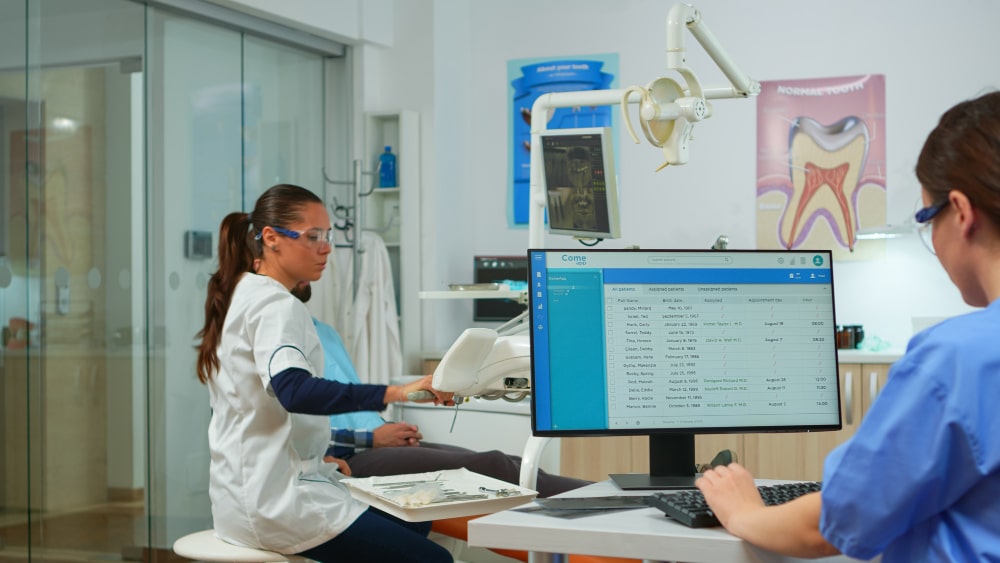
Our custom healthcare app solutions allow clients to deliver effective, improved & secure care while also being compliant with strict industry’s standards like HIPAA regulation
Proven expertise in delivering top-tier solutions.
Specializing in HIPAA-compliant software.
Strict adherence to healthcare regulations.
Known for innovation, reliability, and client satisfaction.
Serving small practices to large hospitals worldwide.
Our commitment to HIPAA and GDPR standards guarantees data protection and patient privacy while maintaining total operational compliance.

Our technology stack provides the foundation to create healthcare solutions that guarantee security, speed and interoperability while maintaining innovation for the future.
 FHIR
FHIR Java
Java React Native
 Flutter
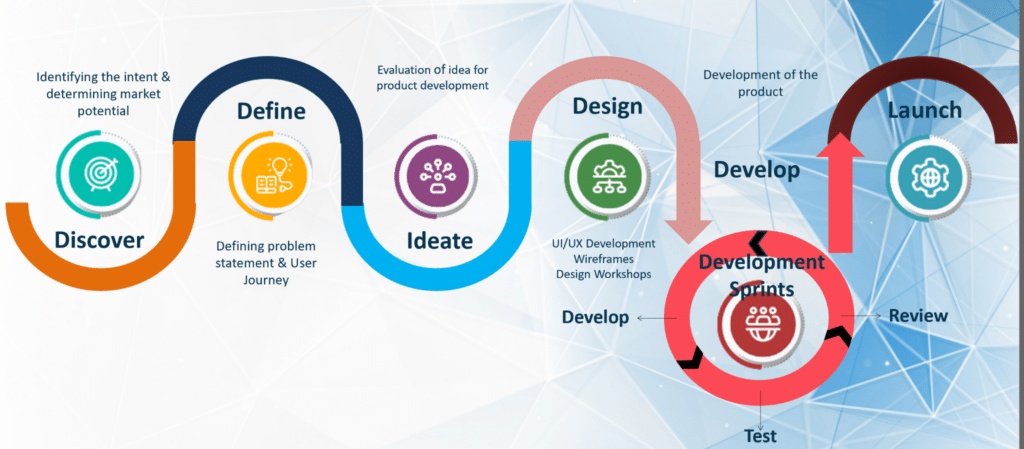
✔ Agile & User-Centric – Accelerated MVP development for faster market entry.
✔ Shortest Time-to-Market – Our TURBO framework ensures speed & efficiency.


Software needs must be collected and assessed to generate an accurate SRS.
Refine feedback and finalize design procedures before creating the development roadmap.
Develop the solution using UI/UX design principles while maintaining security measures and performing compliance and performance testing.
Beta launch followed by a live release.
The maintenance and support phase involves round-the-clock monitoring of systems, analysis of client feedback, and ongoing improvements.
As a leading provider in healthcare software development, we are dedicated to crafting robust solutions that enhance efficiency and elevate patient care across various sectors, including:
Here you’ll find answers to common questions about our clinical data integration queries
Clinical data integration involves consolidating and sharing clinical data from multiple sources, such as EHRs, labs, and imaging centers, to provide healthcare providers with a unified view of patient information for better care coordination and decision-making.
Clinical data integration improves patient care by enabling healthcare providers to access comprehensive, up-to-date patient information in real-time. It also reduces administrative workload, minimizes errors, and enhances collaboration across healthcare providers.
Clinical data integration relies on industry standards such as HL7 (Health Level 7), FHIR (Fast Healthcare Interoperability Resources), and DICOM (Digital Imaging and Communications in Medicine) to ensure seamless data exchange between systems.
Clinical data integration solutions employ encryption, access controls, and audit trails to protect patient data and ensure compliance with healthcare regulations like HIPAA, HITECH, and GDPR, safeguarding sensitive information from unauthorized access.
Yes, clinical data integration helps healthcare organizations analyze data across patient populations, identify trends, and develop preventive care strategies, ultimately improving the health outcomes of communities through data-driven care management.